With demise of Soviet style Socialism in the 1980s most people believed that Government control of affairs of the society will become less and less and Laissez-faire Capitalism will rule the World.But it did not happen.Governments in most of the Western World is trying to control their economies more than before. Is more Government control good or bad?
Let me try to define Laissez-faire Capitalism.
Ayn Rand the Russian-American writer,a staunch supporter of Capitalism said
When I say “capitalism,” I mean a full, pure, uncontrolled, unregulated laissez-faire capitalism—with a separation of state and economics, in the same way and for the same reasons as the separation of state and church.
Actually no country followed Laissez-faire economic system. But most of the Western European countries and USA had a relatively free market economy though with varying degree of Government control.
But after the economic crisis of 2008-09 the Governments are thinking about controlling their economies more and more.
In USA, President Barack Obama's Democratic Party is trying to pass an economy regulation legislation which will increase the control of Government on the financial system.
In a speech today in New York Obama said:
I believe in the power of the free market. I believe in a strong financial sector that helps people to raise capital and get loans and invest their savings. But a free market was never meant to be a free license to take whatever you can get, however you can get it. That is what happened too often in the years leading up to the crisis. Some on Wall Street forgot that behind every dollar traded or leveraged, there is a family looking to buy a house, pay for an education, open a business, or save for retirement.
I have also spoken before about the need to build a new foundation for economic growth in the 21st century. And, given the importance of the financial sector, Wall Street reform is an absolutely essential part of that foundation. Without it, our house will continue to sit on shifting sands, leaving our families, businesses and the global economy vulnerable to future crises. That is why I feel so strongly that we need to enact a set of updated, common-sense rules to ensure accountability on Wall Street and to protect consumers in our financial system.
It is widely agreed that the economic recession of 2008 could have been avoided if the Government had intervened to control unbridled sub prime lending and Mortgage frauds. It is also now clear that it was the bailout by Government using tax payers money that helped to prevent bankruptcy of many Companies.
Recent revelations that Goldman Sachs duped its own customers and made big profits raises the need for more Government regulation in Banking sector.
“The simultaneous selling of securities to customers and shorting them because they believed they were going to default is the most cynical use of credit information that I have ever seen,” said Sylvain R. Raynes, an expert in structured finance at R & R Consulting in New York. “When you buy protection against an event that you have a hand in causing, you are buying fire insurance on someone else’s house and then committing arson.”
Let me quote Obama again:
"It is for this reason that we need a system to shut these firms down with the least amount of collateral damage to innocent people and businesses. And from the start, I've insisted that the financial industry -- and not taxpayers -- shoulder the costs in the event that a large financial company should falter. The goal is to make certain that taxpayers are never again on the hook because a firm is deemed "too big to fail.
"In the end, our system only works -- our markets are only free -- when there are basic safeguards that prevent abuse, that check excess, that ensure that it is more profitable to play by the rules than to game the system. And that is what these reforms are designed to achieve: no more, no less. Because that is how we will ensure that our economy works for consumers, that it works for investors, that it works for financial institutions -- that it works for all of us.
I agree with Obama here. More Government controls,safeguards and regulation will only help the economy.
As the Nobel Prize winning economist and a strong supporter of economic regulations by the State, Paul Krugman said:
For the fact is that much of the financial industry has become a racket — a game in which a handful of people are lavishly paid to mislead and exploit consumers and investors. And if we don’t lower the boom on these practices, the racket will just go on.
Friday, April 23, 2010


Tuesday, April 13, 2010
The sad story of Dr Siras.Time to end this moral policing
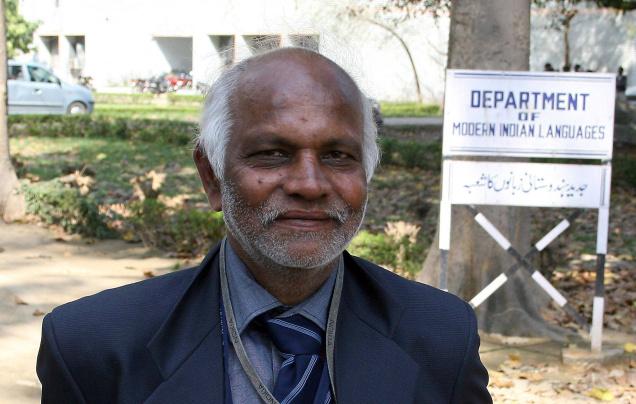
Dr Srinivas Ramachandra Siras,Chairman of the Department of Modern Indian Languages at Aligarh Muslim University was about to retire from his job in September this year after 22 years of distinguished service.. But on February 19, 2010 he was suspended from his job and was asked to leave the University campus vacating his quarters. His crime.....? Having consensual sex in the privacy of his quarters. All the hell broke loose because of a minor factor. His partner was a man.
The Vice Chancellor said he is being suspended for grave misconduct. The suspension was on the basis of a video recording filmed inside Dr Siras's quarters with out his consent.
Dr Siras approached the High Court. On April 1 a Division Bench of Allahabad High Court stayed the suspension and allowed Dr Siras to resume his work and to live in his quarters.
On April 4 Dr Siras approached the Chief Judicial Magistrate seeking action against AMU officials and media persons for intruding his privacy, harassing and blackmailing him.
The life less body of 62-year-old Siras, was found on April 7 lying on the bed in his private apartment outside the University. It was believed that he died at least 2 days ago, may be on April 5, the day after he approached the Court against University authorities. Cause of death is still not known.
Was he killed? Or did he commit suicide? He was on the verge of a personal victory after the High Court order. He proved that he is a fighter by approaching the Court against University authorities. Will such a person take his own life at that particular juncture?
The family members and the Teachers Association have demanded high level probe into the matter.
Some people on the AMU faculty believe that the Vice Chancellor of the University was trying to divert attention from the negative publicity it had received with the recent inquiry ordered by the President of India, Pratibha Patil, after instances of financial bungling and mismanagement came to light. They believe that the video filming was arranged and paid for by top administrators of the University.
A first information report (FIR) was finally registered against four Aligarh Muslim University (AMU) officials and some journalists for breaching the privacy of Dr Siras, on April 9. The case was registered only because of the directions of the court.
The Integrated network of sexual minorities of India [INFOSEM] has started an online petition campaign in this issue. The network demands a judicial enquiry into the whole issue and the suspension of the Vice Chancellor; they want the AMU to respect the rights of its faculty and students, especially their privacy in matters of sex, sexuality and gender.
Aligarh Muslim University is supposed to be the bastion of minority religious rights. But when it comes to the rights of sexual minorities AMU was found inept in ensuring justice.
In view of the recent landmark Delhi High Court judgment legalising Gay sex, let us hope that at least in future, rights of sexual minorities will not be trampled upon by society.
Friday, April 9, 2010
Cervical Cancer Vaccine Project stopped in India
The Indian Central Government have announced the suspension of the HPV vaccine project due to allegations of unethical pratices and deaths of 4 tribal girls in Andhra Pradesh.
Director-General of the Indian Council of Medical Research (ICMR) V.M. Katoch said that he had asked the Health and Family Welfare Ministry, the State governments and the people not to go ahead with the programme. “There can be no compromise, if ethical issues have been violated by any non-governmental organisation or pharmaceutical company. The government is all for the people, and genuine issues have to be addressed.”
The HPV vaccine, Gardasil, meant to prevent cervical cancer among women, has reportedly led to the death of four girls who were administered the dose in Khammam district of Andhra Pradesh. Over 120 girls, who were given the shots, have reported adverse side-effects.
The trials are being described as a “demonstration project” by PATH-International, a U.S.-based non-governmental organisation, which is conducting the project for American pharmaceutical company Merck since July 2009.
The girls, aged between 10 and 14 and belonging to the most vulnerable sections of society, were enrolled in the study approved by the Indian Council of Medical Research (ICMR) and the respective State governments, and is funded by the Bill and Melinda Gates Foundation.
At a press conference conducted in New Delhi on April 7 by representatives of the All-India Democratic Women's Association (AIDWA), Saheli, Sama, All-India People's Science Network, and the Jan Swasthya Abhiyan — Ms.Brinda Karat, the CPI [M] leader accused the pharmaceutical company of misleadingly promoting the vaccine as preventive for cervical cancer as it prevented the cancer of only two strains of hundreds that caused cervical cancer.
“The literature circulated in the project makes outright false statements about its safety, efficacy and duration of effectiveness. The girls and their parents have been told through the project documents that the vaccine will give life-long immunity, has no side-effects other than minor ones like fever and rash, and would not affect future fertility of the young girls,” the speakers said at the press conference.
After visiting some of the areas where the vaccine was administered, Ms. Karat had said the people were given to understand that it was an expensive vaccine and that they would not be able to afford it once the company's project was over, hence they should get their daughters vaccinated. Since the NRHM logo was on the card, the villagers went for the injection.
Close to 70 civil society groups, public health organisations, medical professionals, human rights organisations, women's groups and individuals have voiced their opposition to the nature of the HPV (human papilloma virus) vaccination ‘projects' carried out in Andhra Pradesh and Gujarat by PATH International, in collaboration with the Indian Council of Medical Research (ICMR) and the respective State governments.
They urged the Union government to come up with a national policy on this kind of medical “experimentation” and a pro-people vaccine policy based on public health needs.
In a memorandum submitted to Health and Family Welfare Minister Ghulam Nabi Azad, the groups pointed out that the efficacy of the vaccines, Gardasil and Cervarix, was highly suspect and a number of very serious side-effects, including deaths of vaccinated girls, were reported across the world.
As per extensive documentations made after fact-finding missions by local groups in Khammam district of Andhra Pradesh (where 14,000 girls in the age group of 10-14 years have been vaccinated with three doses of the HPV vaccine), 120 reported adverse side-effects.
The groups also demanded that the government set up an inquiry into the death of four tribal girls and into the side-effects of the vaccine on affected girls so that responsibility could be fixed and action taken.
I had posted about HPV vaccine before in my other blog titled
Should I give the cervical cancer vaccine to my daughter?
My conclusion was like this.
I will not recommend HPV Vaccine with the present available scientific evidence due to the fact that the efficacy in preventing invasive cervical cancer is not much and there is a small but considerable risk of adverse events.
Even though India reports more than 70000 deaths yearly due to cervical cancer,this coslty vaccine [around 10000 Rs for 3 shots] is highly unlikely to make any change in incidence of Cervical cancer in India due to low efficacy and prohibitive cost.
Attempt by Pharma companies to make Indian Government buy such expensive and not so needed intervention through this sham of clinical trials conducted by [?pharma funded] 'NGO's has to be stopped at any cost.
Adapted from reports in The Hindu
Director-General of the Indian Council of Medical Research (ICMR) V.M. Katoch said that he had asked the Health and Family Welfare Ministry, the State governments and the people not to go ahead with the programme. “There can be no compromise, if ethical issues have been violated by any non-governmental organisation or pharmaceutical company. The government is all for the people, and genuine issues have to be addressed.”
The HPV vaccine, Gardasil, meant to prevent cervical cancer among women, has reportedly led to the death of four girls who were administered the dose in Khammam district of Andhra Pradesh. Over 120 girls, who were given the shots, have reported adverse side-effects.
The trials are being described as a “demonstration project” by PATH-International, a U.S.-based non-governmental organisation, which is conducting the project for American pharmaceutical company Merck since July 2009.
The girls, aged between 10 and 14 and belonging to the most vulnerable sections of society, were enrolled in the study approved by the Indian Council of Medical Research (ICMR) and the respective State governments, and is funded by the Bill and Melinda Gates Foundation.
At a press conference conducted in New Delhi on April 7 by representatives of the All-India Democratic Women's Association (AIDWA), Saheli, Sama, All-India People's Science Network, and the Jan Swasthya Abhiyan — Ms.Brinda Karat, the CPI [M] leader accused the pharmaceutical company of misleadingly promoting the vaccine as preventive for cervical cancer as it prevented the cancer of only two strains of hundreds that caused cervical cancer.
“The literature circulated in the project makes outright false statements about its safety, efficacy and duration of effectiveness. The girls and their parents have been told through the project documents that the vaccine will give life-long immunity, has no side-effects other than minor ones like fever and rash, and would not affect future fertility of the young girls,” the speakers said at the press conference.
After visiting some of the areas where the vaccine was administered, Ms. Karat had said the people were given to understand that it was an expensive vaccine and that they would not be able to afford it once the company's project was over, hence they should get their daughters vaccinated. Since the NRHM logo was on the card, the villagers went for the injection.
Close to 70 civil society groups, public health organisations, medical professionals, human rights organisations, women's groups and individuals have voiced their opposition to the nature of the HPV (human papilloma virus) vaccination ‘projects' carried out in Andhra Pradesh and Gujarat by PATH International, in collaboration with the Indian Council of Medical Research (ICMR) and the respective State governments.
They urged the Union government to come up with a national policy on this kind of medical “experimentation” and a pro-people vaccine policy based on public health needs.
In a memorandum submitted to Health and Family Welfare Minister Ghulam Nabi Azad, the groups pointed out that the efficacy of the vaccines, Gardasil and Cervarix, was highly suspect and a number of very serious side-effects, including deaths of vaccinated girls, were reported across the world.
As per extensive documentations made after fact-finding missions by local groups in Khammam district of Andhra Pradesh (where 14,000 girls in the age group of 10-14 years have been vaccinated with three doses of the HPV vaccine), 120 reported adverse side-effects.
The groups also demanded that the government set up an inquiry into the death of four tribal girls and into the side-effects of the vaccine on affected girls so that responsibility could be fixed and action taken.
I had posted about HPV vaccine before in my other blog titled
Should I give the cervical cancer vaccine to my daughter?
My conclusion was like this.
I will not recommend HPV Vaccine with the present available scientific evidence due to the fact that the efficacy in preventing invasive cervical cancer is not much and there is a small but considerable risk of adverse events.
Even though India reports more than 70000 deaths yearly due to cervical cancer,this coslty vaccine [around 10000 Rs for 3 shots] is highly unlikely to make any change in incidence of Cervical cancer in India due to low efficacy and prohibitive cost.
Attempt by Pharma companies to make Indian Government buy such expensive and not so needed intervention through this sham of clinical trials conducted by [?pharma funded] 'NGO's has to be stopped at any cost.
Adapted from reports in The Hindu
Wednesday, April 7, 2010
From Dandi to Dantewada. A study in contrast
April 6. 1930
Millions of Indians led by Gandhiji made salt illegally defying the law as a non- violent form of protest against exploitation and injustice of the ruling British empire.
April 6, 2010.
Maoists killed 72 jawans of the CRPF in an ambush in Dantiwada in a grossly violent form of 'protest' against alleged exploitation and injustice of the rulers.
Methods of agitation cannot be as dissimilar as the above two. Ironically both happened on the same date 80 years apart.
Salt Sathygraha
 Civil disobedience by symbolically breaking the Salt law was the strategy adopted my Gandhiji to create a political awakening in India and there by bring pressure on British to leave India.Salt he knew is essential for all communities, rich and poor alike. He announced his intention to the British through this letter.
LETTER TO LORD IRWIN
SATYAGRHA ASHRAM, SABARMATI,
March 2, 1930
Dear Friend,
I cannot intentionally hurt anything that lives, much less fellow human beings, even though they may do the greatest wrong to me and mine. Whilst, therefore, I hold
the British rule to be a curse, I do not intend harm to a single Englishman or to any legitimate interest he may have in India.
And why do I regard the British rule as a curse?
It has impoverished the dumb millions by a system of progressive exploitation and by a ruinously expensive military and civil administration which the country can never afford.
It has reduced us politically to serfdom.
It is common cause that, however disorganized and, for the time being, insignificant it may be, the party of violence is gaining ground and making itself felt. Its end is the same as mine. But I am convinced that it cannot bring the desired relief to the dumb millions. And the conviction is growing deeper and deeper in me that nothing but unadulterated non-violence can check the organized violence of the British Government. Many think that non-violence is not an active force. My experience, limited though it undoubtedly is, shows that non-violence can be an intensely active force. It is my purpose to set
in motion that force as well against the organized violent force of the British rule as [against] the unorganized violent force of the growing party of violence. To sit still would be to give rein to both the forces above mentioned. Having an unquestioning and immovable faith in the efficacy of non-violence as I know it, it would be sinful on my
part to wait any longer.
But if you cannot see your way to deal with these evils and my letter makes no
appeal to your heart, on the 11th day of this month,1 I shall proceed with such co-workers of the Ashram as I can take, to disregard theprovisions of the salt laws. I regard this tax to be the most iniquitous of all from the poor man’s standpoint. As the independence movement is essentially for the poorest in the land the beginning will
be made with this evil. The wonder is that we have submitted to the cruel monopoly for so long. It is, I know, open to you to frustrate my design by arresting me. I hope that there will be tens of thousands ready, in a disciplined manner, to take up the work after me, and, in the act of disobeying the Salt Act to lay themselves open to the penalties of a law that should never have disfigured the Statute-book.
This letter is not in any way intended as a threat but is a simple and sacred duty peremptory on a civil resister. Therefore I am having it specially delivered by a young English friend who believes in the Indian cause and is a full believer in non-violence and whom Providence seems to have sent to me, as it were, for the very purpose.
I remain,
Your sincere friend,
M. K. GANDHI
Gandhiji started the march along with 78 satyagrahis, well trained in strict discipline and adherence to satyagraha and non violence on March 12. Walking around 15-20 kms a day through 4 districts covering scores of villages he reached Dandi and broke the Salt law on April 6, along with millions of Indians through out the country.
Here is how United Press reporter Webb Miller described the Darsana Salt Work Satyagraha which was broke up by the British Police.
Not one of the marchers even raised an arm to fend off the blows. They went down like ten-pins. From where I stood I heard the sickening whacks of the clubs on unprotected skulls. The waiting crowd of watchers groaned and sucked in their breaths in sympathetic pain at every blow. Those struck down fell sprawling, unconscious or writhing in pain with fractured skulls or broken shoulders. In two or three minutes the ground was quilted with bodies. Great patches of blood widened on their white clothes. The survivors without breaking ranks silently and doggedly marched on until struck down
Maoist violence
Maoists believe Indian State should be overthrown by an armed revolution. They are of the opinion that the exploitation of poor of the Country can only end by a violent revolution. For them each and every person representing the State or the Capitalist class is a legitimate target to kill.Thats why they killed in cold blood 72 jawans of CRPF.
Study in contrast
Maoist believes the end justifies the means by which it is achieved. In contrast Gandhiji believed violence begets violence and an illegitimate way of achieving an end makes the end meaningless. Violence for a good cause makes the cause bad.Non-violence unites while violence divides people.
Is Gandhiji's strategy and beliefs outdated? I do not think so. All over the World it is getting more and more acceptance. You can see such strategies working in anti-war movements and in agitations of environmental groups.
Looking back at the history of the World I am sure that this mindless violence produced by Maoist fundamentalist ideology is bound to fail.
But how many more lives will it take before its inevitable failure?
Millions of Indians led by Gandhiji made salt illegally defying the law as a non- violent form of protest against exploitation and injustice of the ruling British empire.
April 6, 2010.
Maoists killed 72 jawans of the CRPF in an ambush in Dantiwada in a grossly violent form of 'protest' against alleged exploitation and injustice of the rulers.
Methods of agitation cannot be as dissimilar as the above two. Ironically both happened on the same date 80 years apart.
Salt Sathygraha

LETTER TO LORD IRWIN
SATYAGRHA ASHRAM, SABARMATI,
March 2, 1930
Dear Friend,
I cannot intentionally hurt anything that lives, much less fellow human beings, even though they may do the greatest wrong to me and mine. Whilst, therefore, I hold
the British rule to be a curse, I do not intend harm to a single Englishman or to any legitimate interest he may have in India.
And why do I regard the British rule as a curse?
It has impoverished the dumb millions by a system of progressive exploitation and by a ruinously expensive military and civil administration which the country can never afford.
It has reduced us politically to serfdom.
It is common cause that, however disorganized and, for the time being, insignificant it may be, the party of violence is gaining ground and making itself felt. Its end is the same as mine. But I am convinced that it cannot bring the desired relief to the dumb millions. And the conviction is growing deeper and deeper in me that nothing but unadulterated non-violence can check the organized violence of the British Government. Many think that non-violence is not an active force. My experience, limited though it undoubtedly is, shows that non-violence can be an intensely active force. It is my purpose to set
in motion that force as well against the organized violent force of the British rule as [against] the unorganized violent force of the growing party of violence. To sit still would be to give rein to both the forces above mentioned. Having an unquestioning and immovable faith in the efficacy of non-violence as I know it, it would be sinful on my
part to wait any longer.
But if you cannot see your way to deal with these evils and my letter makes no
appeal to your heart, on the 11th day of this month,1 I shall proceed with such co-workers of the Ashram as I can take, to disregard theprovisions of the salt laws. I regard this tax to be the most iniquitous of all from the poor man’s standpoint. As the independence movement is essentially for the poorest in the land the beginning will
be made with this evil. The wonder is that we have submitted to the cruel monopoly for so long. It is, I know, open to you to frustrate my design by arresting me. I hope that there will be tens of thousands ready, in a disciplined manner, to take up the work after me, and, in the act of disobeying the Salt Act to lay themselves open to the penalties of a law that should never have disfigured the Statute-book.
This letter is not in any way intended as a threat but is a simple and sacred duty peremptory on a civil resister. Therefore I am having it specially delivered by a young English friend who believes in the Indian cause and is a full believer in non-violence and whom Providence seems to have sent to me, as it were, for the very purpose.
I remain,
Your sincere friend,
M. K. GANDHI
Gandhiji started the march along with 78 satyagrahis, well trained in strict discipline and adherence to satyagraha and non violence on March 12. Walking around 15-20 kms a day through 4 districts covering scores of villages he reached Dandi and broke the Salt law on April 6, along with millions of Indians through out the country.
Here is how United Press reporter Webb Miller described the Darsana Salt Work Satyagraha which was broke up by the British Police.
Not one of the marchers even raised an arm to fend off the blows. They went down like ten-pins. From where I stood I heard the sickening whacks of the clubs on unprotected skulls. The waiting crowd of watchers groaned and sucked in their breaths in sympathetic pain at every blow. Those struck down fell sprawling, unconscious or writhing in pain with fractured skulls or broken shoulders. In two or three minutes the ground was quilted with bodies. Great patches of blood widened on their white clothes. The survivors without breaking ranks silently and doggedly marched on until struck down
Maoist violence
Maoists believe Indian State should be overthrown by an armed revolution. They are of the opinion that the exploitation of poor of the Country can only end by a violent revolution. For them each and every person representing the State or the Capitalist class is a legitimate target to kill.Thats why they killed in cold blood 72 jawans of CRPF.
Study in contrast
Maoist believes the end justifies the means by which it is achieved. In contrast Gandhiji believed violence begets violence and an illegitimate way of achieving an end makes the end meaningless. Violence for a good cause makes the cause bad.Non-violence unites while violence divides people.
Is Gandhiji's strategy and beliefs outdated? I do not think so. All over the World it is getting more and more acceptance. You can see such strategies working in anti-war movements and in agitations of environmental groups.
Looking back at the history of the World I am sure that this mindless violence produced by Maoist fundamentalist ideology is bound to fail.
But how many more lives will it take before its inevitable failure?
Saturday, April 3, 2010
Can the Maoists shun violence?

In a long article in The Outlook depicting her experience of living and traveling with the Maoists, Arundathi Roy shares similar view. She says
But what should I suggest they do? Go to court? Do a dharna at Jantar Mantar, New Delhi? A rally? A relay hunger strike? It sounds ridiculous. The promoters of the New Economic Policy—who find it so easy to say “There Is No Alternative”—should be asked to suggest an alternative Resistance Policy.
Is that true that Maoists are resorting to violence only because the State is extremely repressive and violent and they having no other alternative but to be violent?
The programme of the CPI[Maoist] says:
The immediate aim and programme of the Maoist party is to carry on and complete the already ongoing and advancing New Democratic Revolution in India as a part of the world proletarian revolution by overthrowing the semi-colonial, semi-feudal system under the neo-colonial form of indirect rule, exploitation and control. This revolution will remain directed against imperialism, feudalism and comprador bureaucratic capitalism. This revolution will be carried out and completed through armed agrarian revolutionary war, i.e. protracted people’s war with the armed seizure of power remaining as its central and principal task, encircling the cities from the countryside and thereby finally capturing them. Hence the countryside as well as the PPW (Protracted People’s War) will remain as the “center of gravity” of the party’s work, while urban work will be complimentary to it.

Here you can see that there is no talk of a non-violent alternative to fight against oppression.
The document states further that
Since armed struggle will remain as the highest and main form of struggle and the army as the main form of organization of this revolution, hence it will continue to play a decisive role, whereas the UF[United Front] will be built in the course of armed struggle and for the seizure of power through armed struggle. Mass organizations and mass struggles are necessary and indispensable but their purpose is to serve the war.
Maoists do not believe in the present Indian State and aims to overthrow it.The problems of the Adivasis are used by the Maoists to organise them against the State.Such people's movements are used by Maoists to serve their armed struggle against the State.
This means Maoists can never shun violence.If they shun violence they cease to be Maoists.
Can the Indian State defeat the Maoists?
Yes,but not by killing all the tribals in Maoist movement,but by genuinely addressing the problems of Adivasis.
Saturday, March 27, 2010
What is the best option for Afghanistan?
What is the best option for Afghanistan?
a. More number of USA/NATO forces and a prolonged war to wipe out Taliban
b. Gradual withdrawal of USA/NATO forces and handing over of power to Karzai and 'good' Taliban
c.Immediate withdrawal of USA/NATO forces and leave Afghanistan for its own people
My feeling is the answer is c. Immediate withdrawal of Occupation forces and leaving Afghanistan to its people is the best and most democratic option.
Foreign troops do not grow democracy and peace especially in a complex geo-political situation like that in Afghanistan. If it could have succeeded it should have won the battle for peace and democracy within a short period of time.After 8 years of occupation by USA/NATO forces the chances of the Occupying Army 'teaching' the people democracy is very slim. On the other hand the Occupation and killing of hundreds of civilians is in turn fueling insurgency.
Let us hear what those fighting the war lords and fundamentalists have to say:
Malalai Joya

As a teacher in the secret schools that educated girls – strictly banned by the Taliban – she walked around western Afghanistan at the end of the 1990s with books hidden beneath the enveloping burqa.
Elected the youngest member of the Afghan parliament – and suspended for her outspoken criticism of the country's top officials – Malalai Joya has been labelled the bravest woman in Afghanistan.
Small, soft-spoken and now 31, she has survived at least four assassination attempts and is angry at the oppressive life she is forced to lead, dodging enemies she has denounced as bloody-handed warlords and drug kingpins. She sleeps in safe houses, with a rotating squad of bodyguards securing the doors. She goes out only in a billowing burqa. Even her wedding was held in secret.
Malalai Joya says;
"Liberation was just a big lie.The United States/NATO should go. As long as foreign troops are in the country we will be fighting two enemies instead of one."
Yes, she says, there is a risk of civil war, as happened when the Soviet Union gave up the fight against U.S.-backed Afghan Islamists 20 years ago. But it would still be better than "night raids, torture and aerial bombardment" that killed hundreds of Afghan civilians while the Taliban made steady gains.
Joya believes Afghans are now better prepared to battle the Taliban alone – if the warlords are disarmed, and the international community helps build a society that can push back against extremism.
It is a tall order, she admits. But "resistance has increased, and people are becoming more aware of democracy and human rights. They need humanitarian and educational support."
But not, she adds, at the point of a gun.
The Afghan public, she adds, are on her side, pointing to a recent opinion poll showing 60 per cent of Afghans want an immediate NATO withdrawal. Many people in Afghanistan were hopeful, she says, about Barack Obama – "but he is actually intensifying the policy of George Bush... I know his election has great symbolic value in terms of the struggle of African-Americans for equal rights, and this struggle is one I admire and respect. But what is important for the world is not whether the President is black or white, but his actions. You can't eat symbolism."
US policy is driven by geopolitics, she says, not personalities. "Afghanistan is in the heart of Asia, so it's a very important place to have military bases – so they can control trade very easily with other Asian powers such as China, Russia, Iran and so on.
"But it can be changed by Americans," she adds. She is passionate now, her voice rising. "I say to Obama – in my area, 150 people were blown up by US troops in one incident this year. If your family had been there, would you send even more troops and even more bombs? Your government is spending $18m (£11m) to make another Guantanamo jail in Bagram. If your daughter might be detained there, would you be building it? I say to Obama – change course, or otherwise tomorrow people will call you another Bush."
RAWA
Founded in 1977,Revolutionary Association of the Women of Afghanistan [RAWA] is the oldest political and social organization of Afghan women struggling for peace, freedom, democracy, and women’s rights in an Afghanistan blighted by fundamentalism. Their members risk personal safety and dedicate their lives to improving conditions for all Afghan women; many have been assassinated, included RAWA’s founder, Meena.
The organization calls for the immediate withdrawal of U.S. and NATO troops.
During October 2009, RAWA sponsored a speaking tour of the U.S. Representing RAWA’s Foreign Committee, Zoya spoke in a meeting in a University in Iowa,USA:
“I want to focus on the eight years of occupation by the United States and NATO countries, “Unfortunately, the West’s impression that Afghanistan has been liberated by the United States, that Afghanistan is a free country, that we are enjoying freedom and democracy to our country is untrue,” said Zoya.
“Yes, Afghanistan is free for the warlords. Afghanistan is free for drug lords. Afghanistan is free for rapists to rape children and women. Afghanistan is free for United States troops to kill our civilians, our children, our women, day by day in so-called mistakes,” said Zoya.
Zoya is a RAWA member whose parents were killed by extremists in Afghanistan when she was in her teens. She honors her mother’s work for women’s rights by continuing in her footsteps. Education of women, often in refugee camps and orphanages, has produced a generation of women like Zoya who are able in turn to educate us about conditions in their country.A refugee currently living in Pakistan, Zoya uses a pseudonym when traveling and speaking because her life has been threatened by fundamentalists. She also asked photographers not to photograph her face.
The U.S. invaded Afghanistan in pursuit of its geo-political, economic, and regional strategic goals and to build military bases there, said Zoya, “not to liberate women.”
Freedom, democracy, and justice cannot be exported and forced on other countries at gunpoint, but instead are achieved over time through a long and arduous process, said Zoya.
“Those who claim to donate these values to the Afghan people through force will only push our country into slavery. It is our responsibility to stand up to fundamentalists and occupations,” said Zoya.
The women of Afghanistan, after eight years of occupation, offer conflicting advice, depending on their position in society. If the women are in Kabul, are educated and affluent, and have family members in office or are part of the government, they sometimes say, “our safety is in danger if U.S. troops leave." If the women are in the countryside (and 90% are) they say, “get the troops out now. Our rights, our freedoms, our safety have not improved in eight years of occupation — and the occupation fuels the insurgency.” In this complex war-torn nation, both opinions are valid.
Both Zoya and Malalai must live in safe houses and move frequently, as their truth-telling has resulted in death threats against them. Yet asked what she fears, Malalai said: “I don’t fear death. I fear political silence against injustice.” And from her website Malaijoya.com this statement, echoes fears raised during the rise of fascism in 20th century Europe: “The silence of good people is worse than the actions of bad people.”
Although the robotic killer drones strike wedding parties and funerals, crossing into Pakistan freely, the insurgency grows. Terrorists are created faster than they are being killed. But maybe that’s the real goal?
Speak up and expose the so-called war on terror for what it really is: a marketing strategy for corporate profits, Zoya adds..
Although the group initially welcomed the U.S. presence, RAWA changed its stance after learning that the United States is helping fundamentalist groups.
“I think it’s the Afghan people’s responsibility to fight [against fundamentalist groups],” she said.
Yes Afghanistan should fight its own battle against fundamentalism.The rest of the World should support the democratic forces from outside..
Let me end this post with a quote of Malalai Joya.
"They will kill me but they will not kill my voice, because it will be the voice of all Afghan women. You can cut the flower, but you cannot stop the coming of spring".
links and acknowledgments
RAWA,
the star
the independent malalaijoya.com
a. More number of USA/NATO forces and a prolonged war to wipe out Taliban
b. Gradual withdrawal of USA/NATO forces and handing over of power to Karzai and 'good' Taliban
c.Immediate withdrawal of USA/NATO forces and leave Afghanistan for its own people
My feeling is the answer is c. Immediate withdrawal of Occupation forces and leaving Afghanistan to its people is the best and most democratic option.
Foreign troops do not grow democracy and peace especially in a complex geo-political situation like that in Afghanistan. If it could have succeeded it should have won the battle for peace and democracy within a short period of time.After 8 years of occupation by USA/NATO forces the chances of the Occupying Army 'teaching' the people democracy is very slim. On the other hand the Occupation and killing of hundreds of civilians is in turn fueling insurgency.
Let us hear what those fighting the war lords and fundamentalists have to say:
Malalai Joya

As a teacher in the secret schools that educated girls – strictly banned by the Taliban – she walked around western Afghanistan at the end of the 1990s with books hidden beneath the enveloping burqa.
Elected the youngest member of the Afghan parliament – and suspended for her outspoken criticism of the country's top officials – Malalai Joya has been labelled the bravest woman in Afghanistan.
Small, soft-spoken and now 31, she has survived at least four assassination attempts and is angry at the oppressive life she is forced to lead, dodging enemies she has denounced as bloody-handed warlords and drug kingpins. She sleeps in safe houses, with a rotating squad of bodyguards securing the doors. She goes out only in a billowing burqa. Even her wedding was held in secret.
Malalai Joya says;
"Liberation was just a big lie.The United States/NATO should go. As long as foreign troops are in the country we will be fighting two enemies instead of one."
Yes, she says, there is a risk of civil war, as happened when the Soviet Union gave up the fight against U.S.-backed Afghan Islamists 20 years ago. But it would still be better than "night raids, torture and aerial bombardment" that killed hundreds of Afghan civilians while the Taliban made steady gains.
Joya believes Afghans are now better prepared to battle the Taliban alone – if the warlords are disarmed, and the international community helps build a society that can push back against extremism.
It is a tall order, she admits. But "resistance has increased, and people are becoming more aware of democracy and human rights. They need humanitarian and educational support."
But not, she adds, at the point of a gun.
The Afghan public, she adds, are on her side, pointing to a recent opinion poll showing 60 per cent of Afghans want an immediate NATO withdrawal. Many people in Afghanistan were hopeful, she says, about Barack Obama – "but he is actually intensifying the policy of George Bush... I know his election has great symbolic value in terms of the struggle of African-Americans for equal rights, and this struggle is one I admire and respect. But what is important for the world is not whether the President is black or white, but his actions. You can't eat symbolism."
US policy is driven by geopolitics, she says, not personalities. "Afghanistan is in the heart of Asia, so it's a very important place to have military bases – so they can control trade very easily with other Asian powers such as China, Russia, Iran and so on.
"But it can be changed by Americans," she adds. She is passionate now, her voice rising. "I say to Obama – in my area, 150 people were blown up by US troops in one incident this year. If your family had been there, would you send even more troops and even more bombs? Your government is spending $18m (£11m) to make another Guantanamo jail in Bagram. If your daughter might be detained there, would you be building it? I say to Obama – change course, or otherwise tomorrow people will call you another Bush."
RAWA
Founded in 1977,Revolutionary Association of the Women of Afghanistan [RAWA] is the oldest political and social organization of Afghan women struggling for peace, freedom, democracy, and women’s rights in an Afghanistan blighted by fundamentalism. Their members risk personal safety and dedicate their lives to improving conditions for all Afghan women; many have been assassinated, included RAWA’s founder, Meena.
The organization calls for the immediate withdrawal of U.S. and NATO troops.
During October 2009, RAWA sponsored a speaking tour of the U.S. Representing RAWA’s Foreign Committee, Zoya spoke in a meeting in a University in Iowa,USA:
“I want to focus on the eight years of occupation by the United States and NATO countries, “Unfortunately, the West’s impression that Afghanistan has been liberated by the United States, that Afghanistan is a free country, that we are enjoying freedom and democracy to our country is untrue,” said Zoya.
“Yes, Afghanistan is free for the warlords. Afghanistan is free for drug lords. Afghanistan is free for rapists to rape children and women. Afghanistan is free for United States troops to kill our civilians, our children, our women, day by day in so-called mistakes,” said Zoya.
Zoya is a RAWA member whose parents were killed by extremists in Afghanistan when she was in her teens. She honors her mother’s work for women’s rights by continuing in her footsteps. Education of women, often in refugee camps and orphanages, has produced a generation of women like Zoya who are able in turn to educate us about conditions in their country.A refugee currently living in Pakistan, Zoya uses a pseudonym when traveling and speaking because her life has been threatened by fundamentalists. She also asked photographers not to photograph her face.
The U.S. invaded Afghanistan in pursuit of its geo-political, economic, and regional strategic goals and to build military bases there, said Zoya, “not to liberate women.”
Freedom, democracy, and justice cannot be exported and forced on other countries at gunpoint, but instead are achieved over time through a long and arduous process, said Zoya.
“Those who claim to donate these values to the Afghan people through force will only push our country into slavery. It is our responsibility to stand up to fundamentalists and occupations,” said Zoya.
The women of Afghanistan, after eight years of occupation, offer conflicting advice, depending on their position in society. If the women are in Kabul, are educated and affluent, and have family members in office or are part of the government, they sometimes say, “our safety is in danger if U.S. troops leave." If the women are in the countryside (and 90% are) they say, “get the troops out now. Our rights, our freedoms, our safety have not improved in eight years of occupation — and the occupation fuels the insurgency.” In this complex war-torn nation, both opinions are valid.
Both Zoya and Malalai must live in safe houses and move frequently, as their truth-telling has resulted in death threats against them. Yet asked what she fears, Malalai said: “I don’t fear death. I fear political silence against injustice.” And from her website Malaijoya.com this statement, echoes fears raised during the rise of fascism in 20th century Europe: “The silence of good people is worse than the actions of bad people.”
Although the robotic killer drones strike wedding parties and funerals, crossing into Pakistan freely, the insurgency grows. Terrorists are created faster than they are being killed. But maybe that’s the real goal?
Speak up and expose the so-called war on terror for what it really is: a marketing strategy for corporate profits, Zoya adds..
Although the group initially welcomed the U.S. presence, RAWA changed its stance after learning that the United States is helping fundamentalist groups.
“I think it’s the Afghan people’s responsibility to fight [against fundamentalist groups],” she said.
Yes Afghanistan should fight its own battle against fundamentalism.The rest of the World should support the democratic forces from outside..
Let me end this post with a quote of Malalai Joya.
"They will kill me but they will not kill my voice, because it will be the voice of all Afghan women. You can cut the flower, but you cannot stop the coming of spring".
links and acknowledgments
RAWA,
the star
the independent malalaijoya.com
Thursday, March 18, 2010
Reservation for women. What can we expect from bahus and betis?
The issue of Reservation for women in Indian Parliament and State legislatures is heating up the already hot summer in this country. Opinions are divided and keenly debated. Let us examine the issue from all viewpoints and try to come to a conclusion on the merits and de-merits of the bill.
What the Women's reservation bill envisages?
The bill proposes to reserve for women 33% of seats in Lok Sabha and State Assemblies for next 15 years from the day it becomes the law. The constituencies are to be decided by lot and will change in each elections there by ensuring that by end of 15 years all constituencies in India will have had a women member representing it.
For the Bill
Those who support the bill says that while the Indian constitution, one of the most progressive in the world guarantees equal rights for men and women, in reality the gender based discrimination is still a major issue. Bias against women and girls is reflected in the demographic ratio of 933 females for every 1,000 males. 1 in 5 of Indian women die during childbirth, and that account for more than 20 percent of the global maternal deaths. As far as political participation of women is concerned, the Lok Sabha elections in 2009 was the only time when women candidates witnessed a 10 percent participation in Parliament
. Women. need reservation in Parliament and state legislatures because society is “paternalistic” and it is difficult for them to contest and win elections against the “established and entrenched male chauvinistic order in the society”. Participation of more number of women in active politics will help break the gender stereotype and help in enactment of more gender sensitive legislations. They claim that legislatures will become less corrupt and less number of criminals will be elected.
Against the Bill [from Manushi online petition]
The Bill provides for reservation on rotation basis through a lottery system, which means that two-thirds of the incumbent members will be forcibly unseated in every general election and the remaining will remain in a limbo till the last moment. Such compulsory unseating violates the basic principal of democratic representation and jeopardises the possibility of effective planning to contest by nurturing a political constituency for both male and female candidates. As legislators will be denied the possibility of seeking re election from the same constituency, politics will become even less accountable than at present. Since a seat will be reserved once in 15 years, males who will be pushed out of their constituency are likely to field their own female relatives as proxy candidates as a stopgap arrangement and women will not get the chance to cultivate deep roots in their constituency. Women will be ghettoised and forced to fight elections only against other women. They will lack the legitimacy of being mainstream politicians.
Alternative Proposal [Manushi, CSDS, Loksatta]
A law should be enacted amending The Representation of the People Act, 1951, to make it mandatory for every recognized political party to nominate women candidates for election in at least one-third of the constituencies. In the event of any recognized party failing to nominate one-third women candidates, 2 male candidates will lose the Party symbol. This Bill has the following advantages: Firstly, parties will be free to field women candidates where they can offer a good fight rather than in pre-fixed lottery based constituencies, where they may or may not have viable women candidates. Thus there is flexibility and promotion of natural leadership. A woman candidate will be contesting both against female and/or male candidates of rival parties. The democratic choice of voters is not restricted to compulsorily electing only women candidates.
Unlike with the lottery system of reserved constituencies, in which women's presence is likely to get ossified at 33 percent since there would be resistance to letting women contest from non-reserved constituencies, this model allows for far greater flexibility in the number and proportion of women being elected to legislatures. If women are candidates for one-third of all seats contested by each party, theoretically they could even win the vast majority of seats - all on merit.
My Take.
I support the Women's reservation Bill, as I believe it is a measure in right direction that can reduce the gender disparity in India especially in the political arena.
Let me examine the points made out against the Bill.
It is undemocratic because a person cannot contest a particular seat because of his gender.
In 90% of seats women were kept out because of traditional/cultural reservation for men. Was that democratic? Here this reservation is an affirmative action, forcing political parties to be more gender sensitive and there by reducing the disparity. In legislatures. If this measure is not implemented now, it may take at least another 50 to 100 years for us to see 33% seats filled by women.
Effective nurturing of constituencies by MPs will not take place, as they will not be sure of re-contesting.
Here it is implied that women who get elected in reserved constituency will not be fielded again as the constituency become un-reserved.
Let us see if there is any data to prove or disprove this point from the experience from Local Body elections.
In a paper published in American Political Science Review [Feb 2009] analysing Mumbai Municipal Corporation elections of 1997 and 2002, Rikhil Bhavnani says that
"the probability of a woman winning office conditional on the constituency being reserved for women in the previous election is approximately five times the probability of a woman winning office if the constituency had not been reserved for women The data suggest that reservations work in part by introducing into politics women who are able to win elections after reservations are withdrawn and by allowing parties to learn that women can win elections."
In other words chance of women getting her seat even in unreserved quota is high and also her chance of winning again is also much better.. In 1997 in open constituencies only 3.4% women won while in 2002 it more than doubled to 8.6%.
This proves that many women will be given tickets again and many will win in open constituencies.
There will some dislocations but that is worthwhile if we can get a pool of women active in politics.
Women elected will be proxies[bahu-beti] useful only for keeping the seats warm for male members of the family.
I feel there is an implied sexism in this viewpoint. Unfortunately powerful families controlling politics of an area is very common in India. Members of such powerful families, both males and females are active in politics. Some are efficient while others are not so good regardless of the gender. How can one conclude that women members of such families will be useless and inefficient proxies while males will have an effective voice of their own?
Let us take the so-called 'first' family of India. Jawaharlal Nehru's daughter was in all counts much more efficient and powerful than his grand sons. Even the 'foreign' granddaughter in law seems to be much better than the 'Indian' grand sons.
Radu ban and Vijayendra Rao in a study of 523 village Panchayaths say that
We show that women elected in reserved constituencies are not tokens. They are as likely to be persuaded to contest by political elites as unreserved presidents. They are from the upper end of the distribution of women and tend to be more knowledgeable about political activities, more politically experienced, and wealthier than the average woman.
Alternative proposal to make it compulsory for political parties to reserve for women 33% in their list of candidates.....
This makes it easy for political parties to allocate seats to women where there is only a remote possibility of winning. Thus the BJP can allocate women seats in Kerala and Tamilnadu while the CPM can give women seats in states other than Kerala and West Bengal. Thus the total number of women winning elections may not go up from current 10%.
What can we expect when more and more bahus and betis are elected?
A study of 523 villages in 4 southern states of India by Radu ban and Vijayendra Rao had the following findings.
"Women leaders tend to be picked from among more politically knowledgeable and wealthier women. Panchayats led by women are no worse or better in their performance than those with male leaders, and women politicians may not make decisions in line with the needs of women. Importantly, however,political experience enhances the performance of women leaders more than it does for men, women in villages which are less dominated by upper castes, and in states that have relatively mature panchayat systems, perform better than men.
Chattopadhyay and Duflo (2004) in a study in West Bengal and Rajasthan found that women tend to give more importance to water and sanitation than roads.
Lori Beaman, Raghebendra Chattopadhyay, Esther Duflo et al find evidence from West Bengal that
"Villagers who have never been required to have a female leader prefer male leaders and perceive hypothetical female leaders as less effective than their male counterparts, when stated performance is identical. Exposure to a female leader does not alter villagers' taste preference for male leaders. However, it weakens stereotypes about gender roles in the public and domestic spheres and eliminates the negative bias in how female leaders' effectiveness is perceived among male villagers. Consistent with our experimental findings, villagers rate their women leaders as less effective when exposed to them for the first, but not second, time. These changes in attitude are electorally meaningful: after 10 years of the quota policy, women are more likely to stand for and win free seats in villages that have been continuously required to have a female chief councillor".
How an all women panchayath in Haryana is breaking several steroetypes is illustrated in this report.
In conclusion let me warn you that women's reservation in legislatures is not a panacea for all evils in the society. The wealthy and powerful families will still rule the country unless a level playing field is created in regard to election expenditures. Females will be still discriminated and stereotyped. The women members may not be much different in regard to corruption and in efficiency.
But what ever be its limitations women's reservation in Indian legislatures will be a big step forward in the struggle for abolishing gender discrimination.
acknowledgement
urbanomics
IHM's post for Tehelka link
What the Women's reservation bill envisages?
The bill proposes to reserve for women 33% of seats in Lok Sabha and State Assemblies for next 15 years from the day it becomes the law. The constituencies are to be decided by lot and will change in each elections there by ensuring that by end of 15 years all constituencies in India will have had a women member representing it.
For the Bill
Those who support the bill says that while the Indian constitution, one of the most progressive in the world guarantees equal rights for men and women, in reality the gender based discrimination is still a major issue. Bias against women and girls is reflected in the demographic ratio of 933 females for every 1,000 males. 1 in 5 of Indian women die during childbirth, and that account for more than 20 percent of the global maternal deaths. As far as political participation of women is concerned, the Lok Sabha elections in 2009 was the only time when women candidates witnessed a 10 percent participation in Parliament
. Women. need reservation in Parliament and state legislatures because society is “paternalistic” and it is difficult for them to contest and win elections against the “established and entrenched male chauvinistic order in the society”. Participation of more number of women in active politics will help break the gender stereotype and help in enactment of more gender sensitive legislations. They claim that legislatures will become less corrupt and less number of criminals will be elected.
Against the Bill [from Manushi online petition]
The Bill provides for reservation on rotation basis through a lottery system, which means that two-thirds of the incumbent members will be forcibly unseated in every general election and the remaining will remain in a limbo till the last moment. Such compulsory unseating violates the basic principal of democratic representation and jeopardises the possibility of effective planning to contest by nurturing a political constituency for both male and female candidates. As legislators will be denied the possibility of seeking re election from the same constituency, politics will become even less accountable than at present. Since a seat will be reserved once in 15 years, males who will be pushed out of their constituency are likely to field their own female relatives as proxy candidates as a stopgap arrangement and women will not get the chance to cultivate deep roots in their constituency. Women will be ghettoised and forced to fight elections only against other women. They will lack the legitimacy of being mainstream politicians.
Alternative Proposal [Manushi, CSDS, Loksatta]
A law should be enacted amending The Representation of the People Act, 1951, to make it mandatory for every recognized political party to nominate women candidates for election in at least one-third of the constituencies. In the event of any recognized party failing to nominate one-third women candidates, 2 male candidates will lose the Party symbol. This Bill has the following advantages: Firstly, parties will be free to field women candidates where they can offer a good fight rather than in pre-fixed lottery based constituencies, where they may or may not have viable women candidates. Thus there is flexibility and promotion of natural leadership. A woman candidate will be contesting both against female and/or male candidates of rival parties. The democratic choice of voters is not restricted to compulsorily electing only women candidates.
Unlike with the lottery system of reserved constituencies, in which women's presence is likely to get ossified at 33 percent since there would be resistance to letting women contest from non-reserved constituencies, this model allows for far greater flexibility in the number and proportion of women being elected to legislatures. If women are candidates for one-third of all seats contested by each party, theoretically they could even win the vast majority of seats - all on merit.
My Take.
I support the Women's reservation Bill, as I believe it is a measure in right direction that can reduce the gender disparity in India especially in the political arena.
Let me examine the points made out against the Bill.
It is undemocratic because a person cannot contest a particular seat because of his gender.
In 90% of seats women were kept out because of traditional/cultural reservation for men. Was that democratic? Here this reservation is an affirmative action, forcing political parties to be more gender sensitive and there by reducing the disparity. In legislatures. If this measure is not implemented now, it may take at least another 50 to 100 years for us to see 33% seats filled by women.
Effective nurturing of constituencies by MPs will not take place, as they will not be sure of re-contesting.
Here it is implied that women who get elected in reserved constituency will not be fielded again as the constituency become un-reserved.
Let us see if there is any data to prove or disprove this point from the experience from Local Body elections.
In a paper published in American Political Science Review [Feb 2009] analysing Mumbai Municipal Corporation elections of 1997 and 2002, Rikhil Bhavnani says that
"the probability of a woman winning office conditional on the constituency being reserved for women in the previous election is approximately five times the probability of a woman winning office if the constituency had not been reserved for women The data suggest that reservations work in part by introducing into politics women who are able to win elections after reservations are withdrawn and by allowing parties to learn that women can win elections."
In other words chance of women getting her seat even in unreserved quota is high and also her chance of winning again is also much better.. In 1997 in open constituencies only 3.4% women won while in 2002 it more than doubled to 8.6%.
This proves that many women will be given tickets again and many will win in open constituencies.
There will some dislocations but that is worthwhile if we can get a pool of women active in politics.
Women elected will be proxies[bahu-beti] useful only for keeping the seats warm for male members of the family.
I feel there is an implied sexism in this viewpoint. Unfortunately powerful families controlling politics of an area is very common in India. Members of such powerful families, both males and females are active in politics. Some are efficient while others are not so good regardless of the gender. How can one conclude that women members of such families will be useless and inefficient proxies while males will have an effective voice of their own?
Let us take the so-called 'first' family of India. Jawaharlal Nehru's daughter was in all counts much more efficient and powerful than his grand sons. Even the 'foreign' granddaughter in law seems to be much better than the 'Indian' grand sons.
Radu ban and Vijayendra Rao in a study of 523 village Panchayaths say that
We show that women elected in reserved constituencies are not tokens. They are as likely to be persuaded to contest by political elites as unreserved presidents. They are from the upper end of the distribution of women and tend to be more knowledgeable about political activities, more politically experienced, and wealthier than the average woman.
So such an argument has no basis.
Alternative proposal to make it compulsory for political parties to reserve for women 33% in their list of candidates.....
This makes it easy for political parties to allocate seats to women where there is only a remote possibility of winning. Thus the BJP can allocate women seats in Kerala and Tamilnadu while the CPM can give women seats in states other than Kerala and West Bengal. Thus the total number of women winning elections may not go up from current 10%.
What can we expect when more and more bahus and betis are elected?
A study of 523 villages in 4 southern states of India by Radu ban and Vijayendra Rao had the following findings.
"Women leaders tend to be picked from among more politically knowledgeable and wealthier women. Panchayats led by women are no worse or better in their performance than those with male leaders, and women politicians may not make decisions in line with the needs of women. Importantly, however,political experience enhances the performance of women leaders more than it does for men, women in villages which are less dominated by upper castes, and in states that have relatively mature panchayat systems, perform better than men.
Chattopadhyay and Duflo (2004) in a study in West Bengal and Rajasthan found that women tend to give more importance to water and sanitation than roads.
Lori Beaman, Raghebendra Chattopadhyay, Esther Duflo et al find evidence from West Bengal that
"Villagers who have never been required to have a female leader prefer male leaders and perceive hypothetical female leaders as less effective than their male counterparts, when stated performance is identical. Exposure to a female leader does not alter villagers' taste preference for male leaders. However, it weakens stereotypes about gender roles in the public and domestic spheres and eliminates the negative bias in how female leaders' effectiveness is perceived among male villagers. Consistent with our experimental findings, villagers rate their women leaders as less effective when exposed to them for the first, but not second, time. These changes in attitude are electorally meaningful: after 10 years of the quota policy, women are more likely to stand for and win free seats in villages that have been continuously required to have a female chief councillor".
How an all women panchayath in Haryana is breaking several steroetypes is illustrated in this report.
In conclusion let me warn you that women's reservation in legislatures is not a panacea for all evils in the society. The wealthy and powerful families will still rule the country unless a level playing field is created in regard to election expenditures. Females will be still discriminated and stereotyped. The women members may not be much different in regard to corruption and in efficiency.
But what ever be its limitations women's reservation in Indian legislatures will be a big step forward in the struggle for abolishing gender discrimination.
acknowledgement
urbanomics
IHM's post for Tehelka link
Subscribe to:
Posts (Atom)